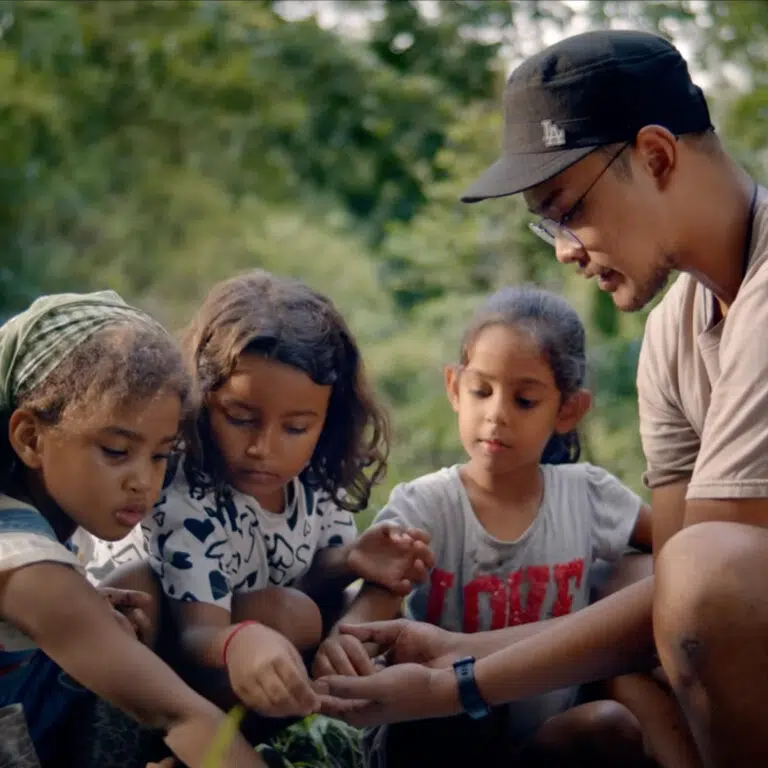
I admire sports coaches who, in high stakes moments of competition, are quiet and composed. It can look like passivity but that stillness is the product of trust. Trust in the preparation, trust in the players, trust that the work done before the whistle was the real work. Student leadership works the same way. When students take the lead it is our time to step back and place trust in them.
For most of its history, education has arguably not been designed with that kind of trust in mind. The term scientific management system of Taylorism stems from Frederick Winslow Taylor, who in the 1900s, built a system around a single idea: in the future, the system must be first. Schools absorbed that logic: bells, standardised outputs, adults as authorities, students as recipients. Common conversations that drive school improvement mostly respond to questions that centre on raising standards, standardising best practice, and improving efficiency. These are all Taylorist questions. They are not wrong questions: structure matters and timetables, incident reporting, and clear processes are essential to a safe and functional school. However, if the goal is to develop young people who can think, lead, and contribute to rapidly changing worlds, then student voice should be placed at the forefront.
Everything we do at Green School Bali focuses on ‘students first’, as shown in our sunflower logo, created by Koruna, a Grade 11 student. The sunflower symbolises our school’s strategic plan. The centre represents students. The petals represent everything that makes up the Green School ecosystem: faculty, families, campus, disciplines, dogs, plants, and all the rest. The Fibonacci sequence because the logic of learning and the logic of life are not separate. Green School doesn’t contain itself, it spills out, launches people, stays connected beyond its edges. Here, we consider how our students are in the middle of all that we think and do, and our more-than-human community expands outward into the wider world.

My role as Deputy Head sits across pastoral care, curriculum, and the systems that shape how students experience school. Student voice is not a strand of that work. It runs through all of it. Students shape school culture, self-advocate, and contribute to communities across Indonesia and beyond. The annual Student Led Strategic Input Session, supporting teachers, the way we design curriculum; all of it only works if students are part of the process. Leading the Green School Student Association (GSSA) is where that belief becomes most concrete. The GSSA is not a student council that meets at lunch to plan events (although it is that too). It is written into school governance. No Upper School policy is passed without equal input from GSSA representatives, teachers, and leadership. Students are far more than just advisors. I am very grateful to co-write this article with Grade 12 student leader, Scarlett who has experienced this first hand and will share her insights with you.
Returning to the coach on the sideline…he or she knows the game is won or lost in training, in the design of the environment, in the relationships built before the pressure arrives. When we design schools that trust students with real responsibility, they rise to it. More often than not, they exceed it.
By Scarlett Gonella, G12 student and Green School Student Association member
As I approach graduation, one of the things I value most about my experience at Green School Bali is the ways that students have an authentic voice. Students are not only encouraged to share their ideas, but expected. We are given genuine opportunities to contribute to decisions, lead initiatives, and create meaningful change within the school community and beyond.
Through my involvement in the Green School Student Association (GSSA), I have seen firsthand how student perspectives can influence school culture. Earlier this year, I helped lead a student-led input session designed to gather feedback from students across the school. Through planning, communication, logistics and facilitation, the process was entirely student-driven. After collecting responses, we analysed the data, identified key themes, and presented our findings to Green School’s Executive Committee (GSEC), allowing them to hear the diverse voices within school. We then shared the outcomes with Middle and High School students through assemblies, ensuring they could see how their feedback was being heard and translated into action.
Student voice has also extended beyond the classroom. As part of the Jalan Jalan class, I spent the year helping plan and deliver Regeneration 26, the world’s largest youth-led regeneration and sustainability conference. Each week we worked on programming, logistics, and event design, gaining valuable experience in leadership and collaboration. During the conference, I served as a student host, introducing speakers and facilitating sessions, and delivered a lightning talk on my capstone project, Greenstone.
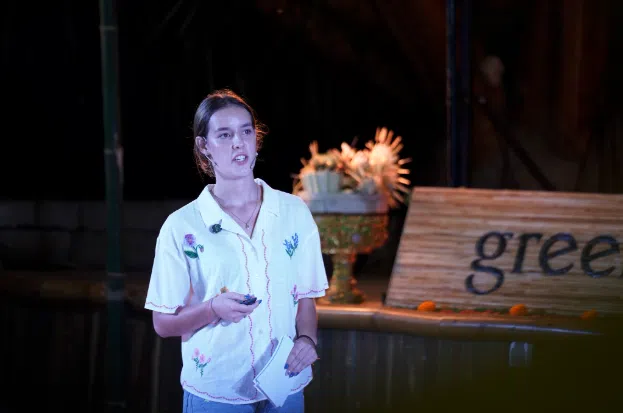
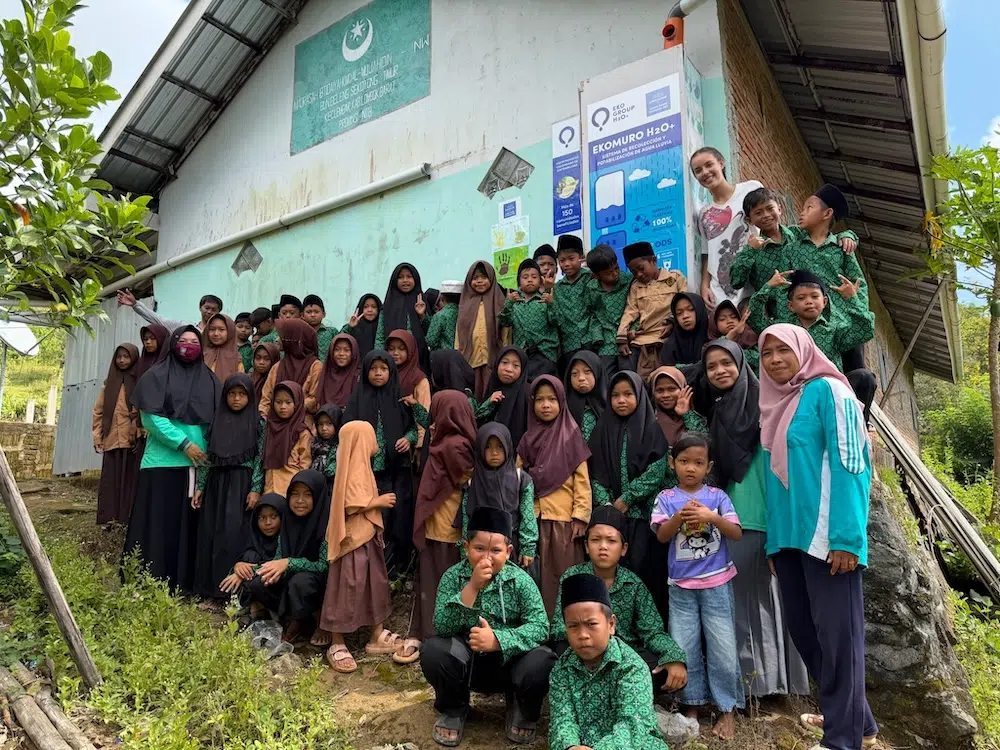
Additionally, my Greenstone capstone project explores the connection between access to safe drinking water and plastic pollution in Indonesia. Through various initiatives, my project aimed to find both practical and awareness-based solutions. Earlier this year, I travelled to Lombok to build a rainwater harvesting system at a local school and lead educational sessions on water safety and environmental stewardship. Being able to take an idea from a school project and turn it into real action within a community has been one of the most meaningful experiences of my time at Green School.
Looking back, many of the skills that helped bring these experiences to life were strengthened through opportunities like GSSA, Regeneration 26, and my capstone. They taught me to take initiative, communicate confidently, participate in formal discussions, and step outside my comfort zone. What makes Green School unique is that students are trusted with real responsibility. As a graduating student, I am grateful for the opportunities I have had to develop as a leader and learn that meaningful change often begins when young people are given the spaces and support to use their voices to contribute to.
Written by Patrick Goodman, Deputy Head of Upper School, with contributions from the Green School Student Association (GSSA) students, Scarlett Gonella and Manon Tiange