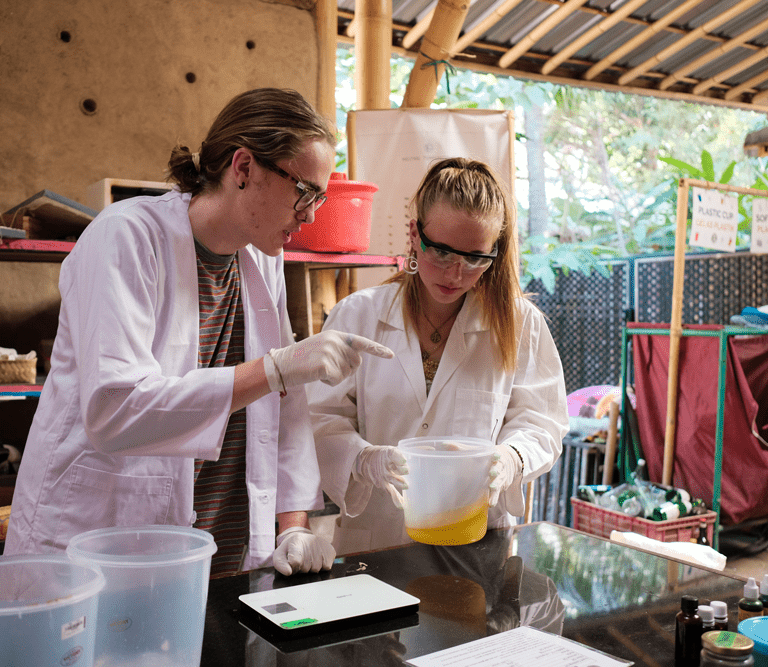
At Green School, Capstones are how students turn learning into work that meets the world. Each Capstone begins with craft. Students learn to sense what matters by listening to people, place, and living systems, and by working carefully with ideas, materials, and evidence. Through seeking, they turn that sensing into questions worth pursuing, questions that respond to real needs rather than pre-set outcomes. Capstones demand commitment. Students stay with their questions long enough for complexity to surface, adapting their work as conditions change and learning what responsibility actually requires. Every Capstone is shaped by contribution to community. These are not simulations. Students take on projects grounded in real contexts and real needs, such as:
- designing surf helmets made from recycled and fully recyclable materials,
- or working to build networks that support regenerative tourism,
- developing water filtration systems using mycelium.
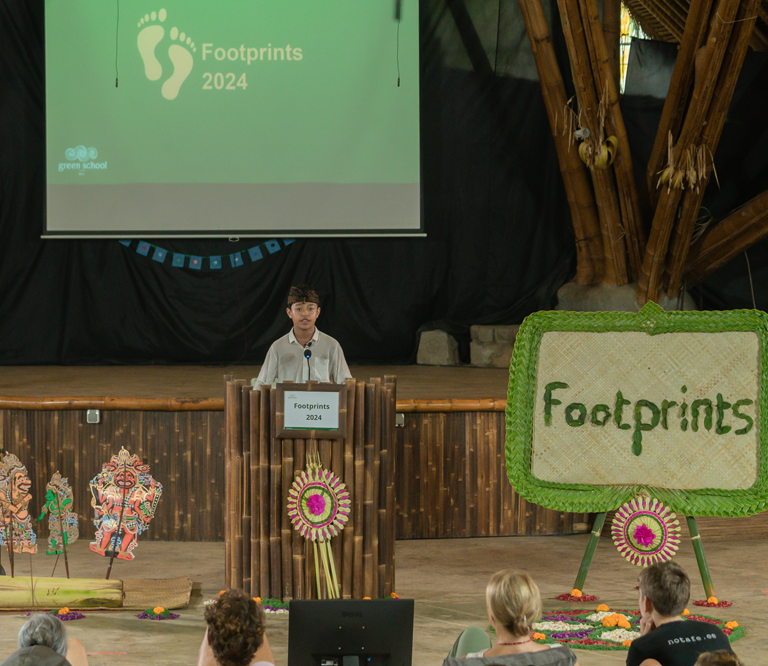
Through storytelling, students learn to communicate their work clearly and honestly, not to perform impact, but to show what they’ve learned, why it matters, and how others might take part.
As students prepare to graduate into a world beyond 2030, the Capstone reflects Green School’s approach to education: learning as participation, responsibility, and contribution in the present, not preparation for a future we can’t predict.